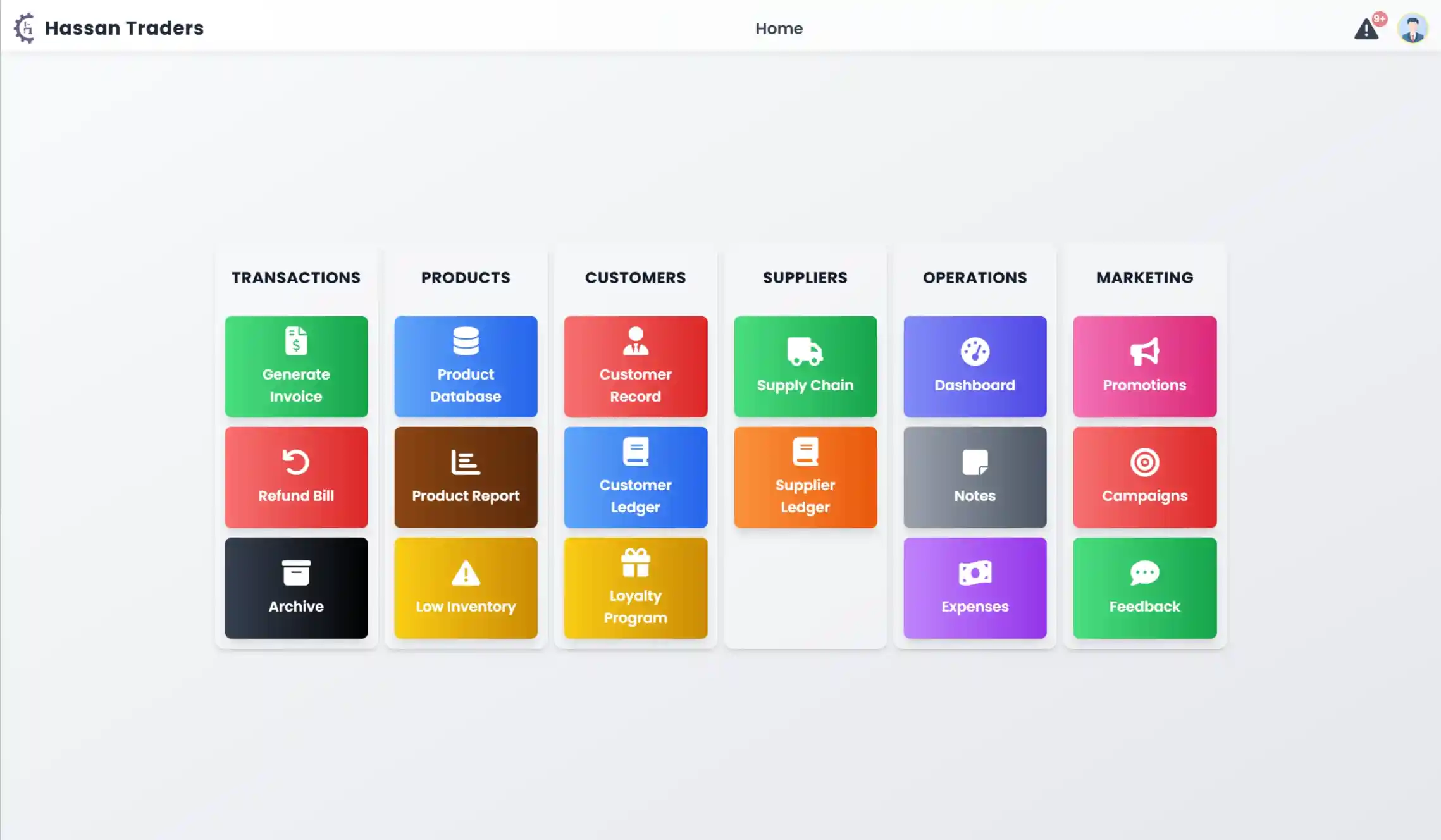
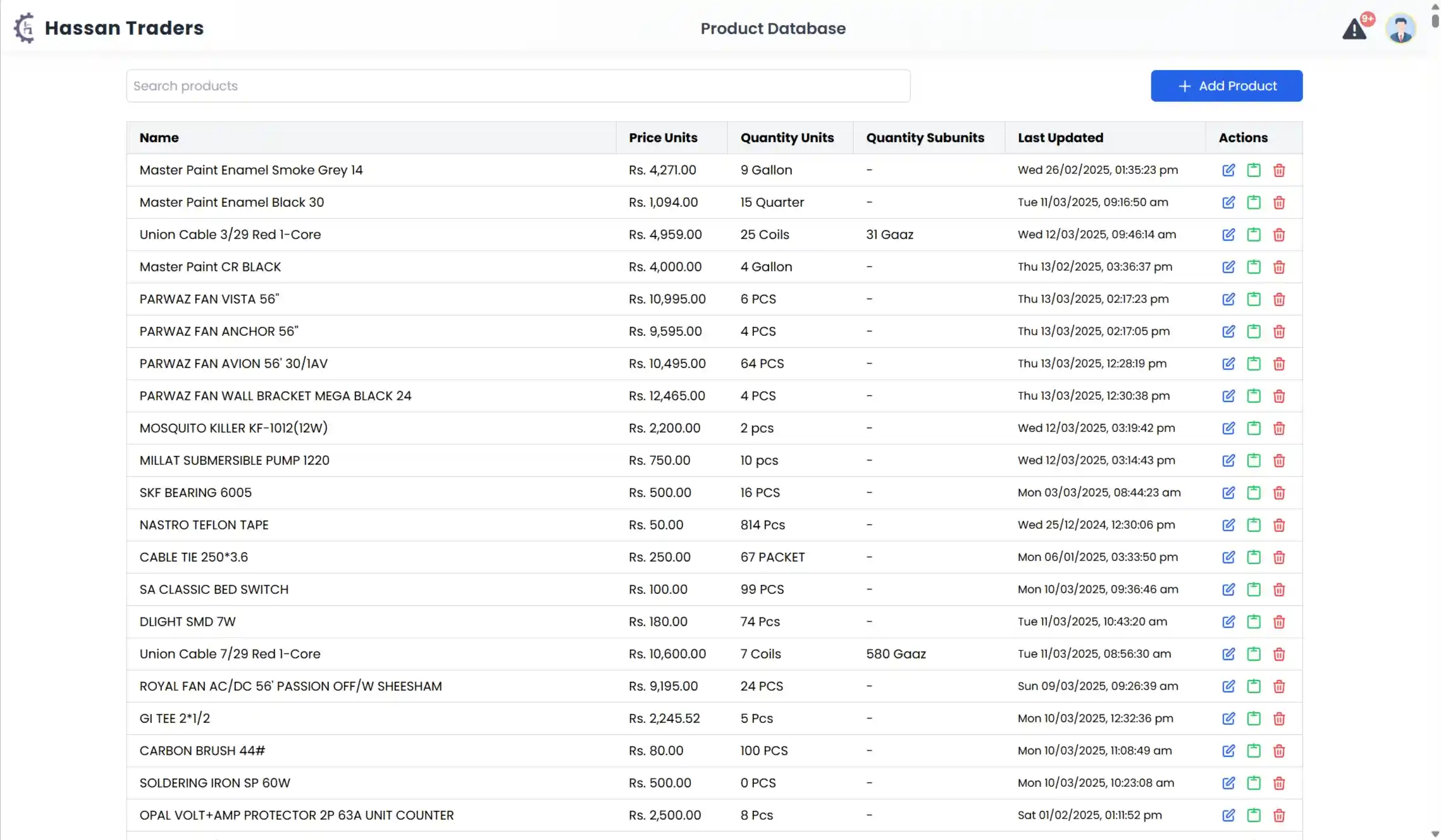
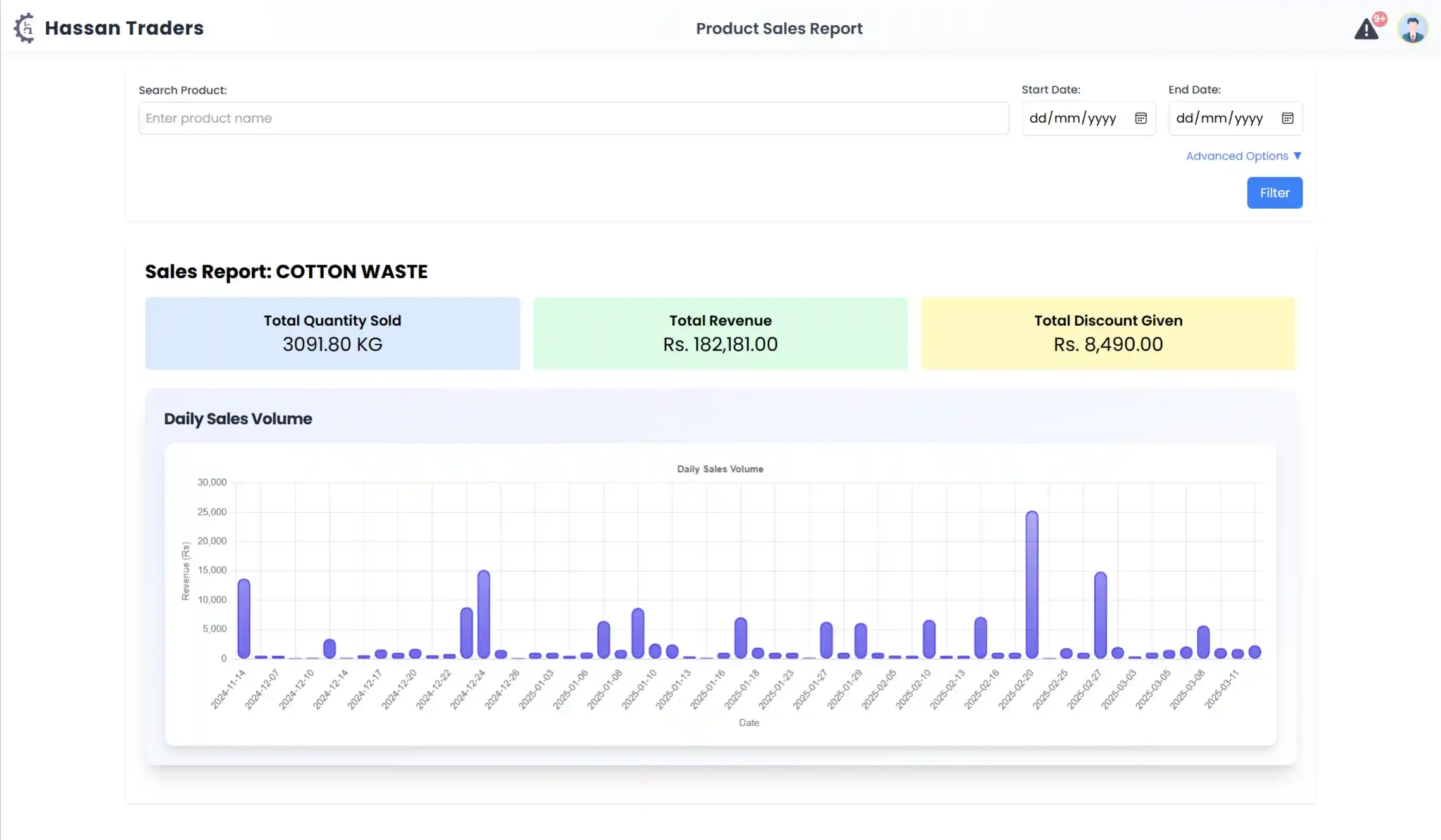
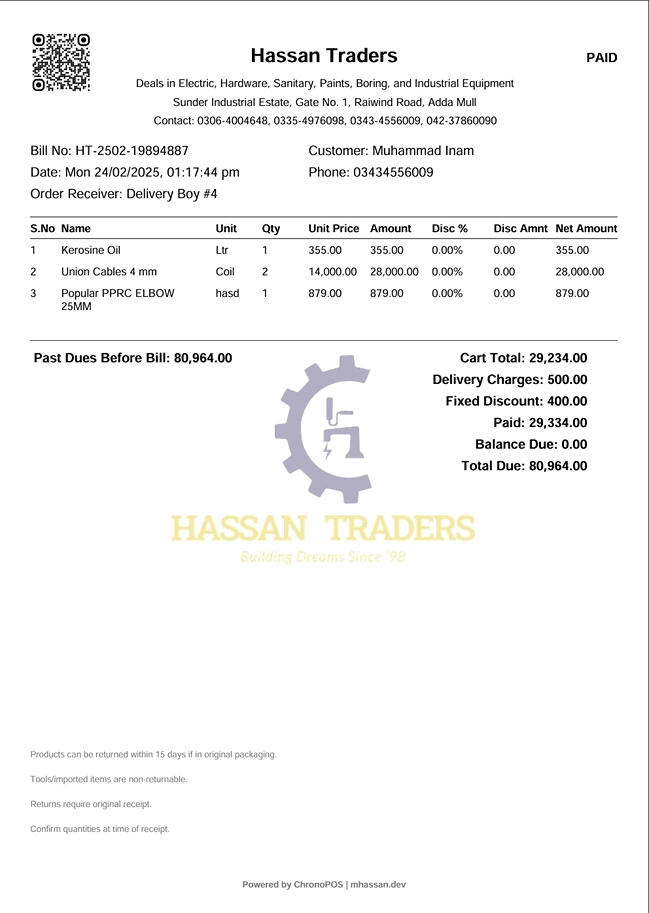
Polaris is a full-stack ERP and POS system I built for retail businesses. It handles inventory, sales, customer management, and financial reporting—the kind of system where bugs cost money and downtime loses customers.
Tech Stack: Vue 3, Pinia, TanStack Query, Django, Django REST Framework, PostgreSQL, WeasyPrint
Source: Private (client work) · Book a call to discuss
The Hard Problems
Building ERP software sounds straightforward until you hit the edge cases that make or break real businesses:
Concurrent inventory access — Two cashiers selling the last item at the same time. Two stock clerks adjusting quantities. A sale happening while someone generates a report.
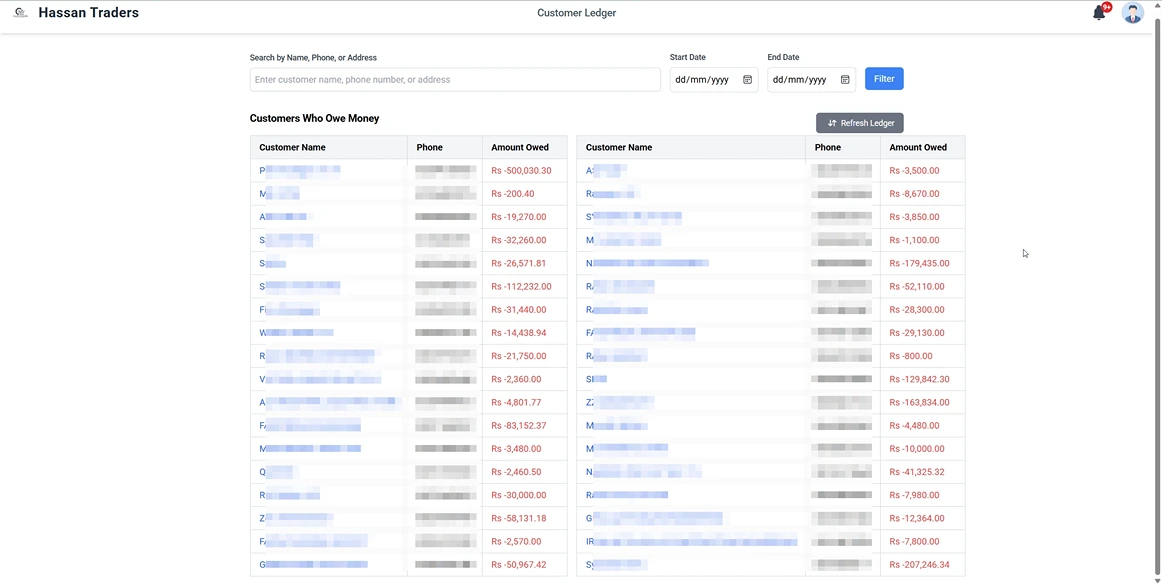
Financial integrity — Customer balances that must always reconcile. Partial payments, returns, credit notes, and adjustments that all need to balance correctly.
Multi-tenant data isolation — Multiple organizations sharing infrastructure where one tenant must never see another’s data—not through bugs, not through clever URL manipulation, not through anything.
Batch costing — Products arrive in batches at different prices. When you sell, which cost do you use? FIFO costing with full supplier traceability.
Technical Deep Dives
Race Condition Prevention: Dual-Layer Locking
The inventory system uses a dual-layer locking strategy to prevent race conditions without sacrificing performance.
Layer 1: Pessimistic Locking with Deadlock Prevention
When a transaction needs to update inventory, we acquire row-level locks in a consistent order:
class InventoryService:
    def update_quantities(self, items: list[tuple[int, Decimal]]):
        """
        Update multiple product quantities atomically.
        Items: list of (product_id, quantity_delta) tuples
        """
        # Sort by ID to prevent deadlocks
        sorted_items = sorted(items, key=lambda x: x[0])

        with transaction.atomic():
            for product_id, delta in sorted_items:
                # NOWAIT fails immediately if lock unavailable
                # Better to fail fast than queue indefinitely
                product = (
                    Product.objects
                    .select_for_update(nowait=True)
                    .get(id=product_id)
                )
                product.quantity += delta
                product.save(update_fields=['quantity', 'updated_at'])
The nowait=True is critical. Without it, transactions queue up waiting for locks, creating latency spikes during busy periods. With nowait, we fail fast and let the application retry with exponential backoff.
Layer 2: Optimistic Locking for Frontend Sync
For the frontend, we need to detect when data has changed between read and write:
class Product(models.Model):
    version = models.PositiveIntegerField(default=0)

    def save(self, *args, **kwargs):
        if self.pk:
            updated = Product.objects.filter(
                pk=self.pk,
                version=self.version
            ).update(
                version=self.version + 1,
                **{f: getattr(self, f) for f in kwargs.get('update_fields', [])}
            )
            if not updated:
                raise StaleDataError("Record modified by another user")
        super().save(*args, **kwargs)
The frontend polls for version changes with a lightweight endpoint that returns ~50 bytes per product—just IDs and versions. When versions mismatch, the UI shows a conflict resolution dialog rather than silently overwriting.
Financial System: Advisory Locks and Double-Entry Bookkeeping
Customer balances are the most sensitive data in the system. A miscalculation means either overcharging customers or losing money.
PostgreSQL Advisory Locks for Balance Operations
Database row locks work for single-row updates, but balance calculations touch multiple rows. We use PostgreSQL advisory locks to serialize operations per customer:
class LedgerService:
    def credit_customer(self, customer_id: int, amount: Decimal, reason: str):
        # Advisory lock scoped to this customer
        lock_id = hash(f"customer_balance_{customer_id}") & 0x7FFFFFFF

        with connection.cursor() as cursor:
            cursor.execute("SELECT pg_advisory_lock(%s)", [lock_id])

        try:
            with transaction.atomic():
                entry = LedgerEntry.objects.create(
                    customer_id=customer_id,
                    entry_type=EntryType.CREDIT,
                    amount=amount,
                    reason=reason,
                    running_balance=self._calculate_new_balance(customer_id, amount)
                )
                # Trigger recalculation signals
                balance_changed.send(sender=self, customer_id=customer_id)
                return entry
        finally:
            with connection.cursor() as cursor:
                cursor.execute("SELECT pg_advisory_unlock(%s)", [lock_id])
Double-Entry with Automatic Reversals
Every financial operation creates a reversible entry. Returns don’t delete the original sale—they create a counter-entry:
class LedgerEntry(models.Model):
    entry_type = models.CharField(choices=EntryType.choices)
    amount = models.DecimalField(max_digits=12, decimal_places=2)
    reversal_of = models.ForeignKey('self', null=True, on_delete=models.PROTECT)
    reversed_by = models.ForeignKey('self', null=True, on_delete=models.PROTECT)

    def reverse(self, reason: str):
        """Create a reversal entry. Original entry remains for audit."""
        reversal = LedgerEntry.objects.create(
            customer=self.customer,
            entry_type=self._inverse_type(),
            amount=self.amount,
            reason=f"Reversal: {reason}",
            reversal_of=self
        )
        self.reversed_by = reversal
        self.save(update_fields=['reversed_by'])
        return reversal
Tolerance-Based Financial Equality
Floating-point comparisons fail on financial data. We use tolerance-based equality:
FINANCIAL_TOLERANCE = Decimal('0.01')

def balances_equal(a: Decimal, b: Decimal) -> bool:
    return abs(a - b) < FINANCIAL_TOLERANCE

def validate_ledger_balance(customer_id: int):
    """Verify running balance matches sum of entries."""
    entries_sum = LedgerEntry.objects.filter(
        customer_id=customer_id,
        reversed_by__isnull=True
    ).aggregate(total=Sum('signed_amount'))['total'] or Decimal('0')

    current_balance = Customer.objects.get(id=customer_id).balance

    if not balances_equal(entries_sum, current_balance):
        raise LedgerIntegrityError(
            f"Balance mismatch: entries={entries_sum}, stored={current_balance}"
        )
Multi-Tenant Architecture
The system serves multiple retail businesses from a single deployment. Data isolation isn’t optional—it’s existential.
Thread-Local Organization Context
Every request establishes an organization context that propagates through the entire call stack:
_org_context = threading.local()

class OrganizationMiddleware:
    def __call__(self, request):
        org_id = self._extract_org_id(request)
        _org_context.organization_id = org_id
        _org_context.organization = Organization.objects.get(id=org_id)

        try:
            response = self.get_response(request)
        finally:
            _org_context.organization_id = None
            _org_context.organization = None

        return response

def get_current_organization():
    return getattr(_org_context, 'organization', None)
Tenant-Aware QuerySet
All models inherit from a base that automatically filters by organization:
class TenantAwareQuerySet(models.QuerySet):
    def get_queryset(self):
        qs = super().get_queryset()
        org = get_current_organization()
        if org:
            return qs.filter(organization=org)
        return qs.none()  # Fail closed, not open

class TenantAwareManager(models.Manager):
    def get_queryset(self):
        return TenantAwareQuerySet(self.model, using=self._db)

class TenantModel(models.Model):
    organization = models.ForeignKey(Organization, on_delete=models.CASCADE)
    objects = TenantAwareManager()
    all_objects = models.Manager()  # Escape hatch for admin/migrations

    class Meta:
        abstract = True
Every query—Product.objects.all(), Customer.objects.filter(name='X')—automatically includes the organization filter. You can’t forget it because it’s built into the ORM.
Batch Inventory and FIFO Costing
Products arrive in batches at different purchase prices. When calculating cost of goods sold, we use FIFO (First In, First Out):
class InventoryBatch(models.Model):
    product = models.ForeignKey(Product, on_delete=models.CASCADE)
    purchase = models.ForeignKey(Purchase, on_delete=models.PROTECT)
    supplier = models.ForeignKey(Supplier, on_delete=models.PROTECT)
    quantity_received = models.DecimalField(max_digits=10, decimal_places=2)
    quantity_remaining = models.DecimalField(max_digits=10, decimal_places=2)
    unit_cost = models.DecimalField(max_digits=10, decimal_places=2)
    received_at = models.DateTimeField(auto_now_add=True)

class Product(TenantModel):
    @property
    def current_quantity(self):
        """Computed from batches, not stored."""
        return InventoryBatch.objects.filter(
            product=self
        ).aggregate(
            total=Sum('quantity_remaining')
        )['total'] or Decimal('0')

    @property
    def average_cost(self):
        """Weighted average across remaining batches."""
        batches = InventoryBatch.objects.filter(
            product=self,
            quantity_remaining__gt=0
        )
        total_value = sum(b.quantity_remaining * b.unit_cost for b in batches)
        total_qty = sum(b.quantity_remaining for b in batches)
        return total_value / total_qty if total_qty else Decimal('0')
When selling, we consume from oldest batches first:
def consume_inventory(product_id: int, quantity: Decimal) -> list[tuple[Batch, Decimal]]:
    """
    FIFO consumption. Returns list of (batch, quantity_consumed) pairs
    for cost calculation and audit trail.
    """
    consumed = []
    remaining = quantity

    batches = (
        InventoryBatch.objects
        .filter(product_id=product_id, quantity_remaining__gt=0)
        .order_by('received_at')
        .select_for_update()
    )

    for batch in batches:
        if remaining <= 0:
            break

        take = min(batch.quantity_remaining, remaining)
        batch.quantity_remaining -= take
        batch.save(update_fields=['quantity_remaining'])

        consumed.append((batch, take))
        remaining -= take

    if remaining > 0:
        raise InsufficientInventoryError(f"Short {remaining} units")

    return consumed
The PROTECT on supplier prevents orphaned batches—you can’t delete a supplier while inventory from them exists. This maintains the audit trail for traceability.
Soft Delete with Audit Trail
Deleted records aren’t actually deleted—they’re flagged for audit and recovery:
class SoftDeleteQuerySet(TenantAwareQuerySet):
    def get_queryset(self):
        return super().get_queryset().filter(deleted_at__isnull=True)

    def with_deleted(self):
        return super().get_queryset()

class AuditModel(TenantModel):
    created_at = models.DateTimeField(auto_now_add=True)
    created_by = models.ForeignKey(User, on_delete=models.PROTECT, related_name='+')
    updated_at = models.DateTimeField(auto_now=True)
    updated_by = models.ForeignKey(User, on_delete=models.PROTECT, related_name='+')
    deleted_at = models.DateTimeField(null=True, blank=True)
    deleted_by = models.ForeignKey(User, null=True, on_delete=models.PROTECT, related_name='+')
    deletion_reason = models.TextField(blank=True)

    objects = SoftDeleteManager()
    all_objects = models.Manager()

    def soft_delete(self, user, reason: str):
        self.deleted_at = timezone.now()
        self.deleted_by = user
        self.deletion_reason = reason
        self.save(update_fields=['deleted_at', 'deleted_by', 'deletion_reason'])
This combines with tenant-awareness—Product.objects.all() returns non-deleted products for the current organization only.
Frontend Architecture
The Vue 3 frontend separates concerns cleanly between UI state and server state.
Composables for Everything
Over 100 composables handle different concerns:
// useCart.ts - Cart UI state (Pinia)
export const useCart = defineStore('cart', () => {
  const items = ref<CartItem[]>([])
  const customerId = ref<number | null>(null)

  // Persisted to sessionStorage for recovery
  const persistedState = useSessionStorage('cart-state', { items: [], customerId: null })

  // Sync with persisted state
  watch([items, customerId], () => {
    persistedState.value = { items: items.value, customerId: customerId.value }
  })

  return { items, customerId, /* ... */ }
})

// useProducts.ts - Server state (TanStack Query)
export function useProducts(filters: ProductFilters) {
  return useQuery({
    queryKey: ['products', filters],
    queryFn: () => api.products.list(filters),
    staleTime: 30_000,
  })
}

// useProductVersions.ts - Lightweight polling for conflict detection
export function useProductVersions(productIds: number[]) {
  return useQuery({
    queryKey: ['product-versions', productIds],
    queryFn: () => api.products.versions(productIds),
    refetchInterval: 5_000,  // 5s polling
  })
}
Cart Recovery
Session persistence means abandoned carts survive page refreshes:
export function useCartRecovery() {
  const cart = useCart()

  onMounted(() => {
    const persisted = sessionStorage.getItem('cart-state')
    if (persisted) {
      const { items, customerId } = JSON.parse(persisted)
      if (items.length > 0) {
        showRecoveryDialog({ items, customerId })
      }
    }
  })
}
Real-Time Sync: Hybrid SSE + Polling
We use Server-Sent Events for immediate updates with polling as fallback:
class RealtimeSync {
  private eventSource: EventSource | null = null
  private pollInterval: number | null = null

  connect() {
    if (typeof EventSource !== 'undefined') {
      this.eventSource = new EventSource('/api/events/')
      this.eventSource.onmessage = this.handleEvent
      this.eventSource.onerror = this.fallbackToPolling
    } else {
      this.fallbackToPolling()
    }
  }

  private fallbackToPolling() {
    this.eventSource?.close()
    this.pollInterval = setInterval(() => this.poll(), 5000)
  }

  private handleEvent(event: MessageEvent) {
    const { type, payload } = JSON.parse(event.data)

    if (type === 'inventory_update') {
      queryClient.invalidateQueries({ queryKey: ['products'] })
    } else if (type === 'version_conflict') {
      showConflictDialog(payload)
    }
  }
}
Optimistic UI updates show changes immediately, with server confirmation reconciling any conflicts:
const updateQuantity = useMutation({
  mutationFn: (data) => api.inventory.update(data),
  onMutate: async (data) => {
    // Cancel outgoing refetches
    await queryClient.cancelQueries({ queryKey: ['products', data.productId] })

    // Snapshot previous value
    const previous = queryClient.getQueryData(['products', data.productId])

    // Optimistically update
    queryClient.setQueryData(['products', data.productId], (old) => ({
      ...old,
      quantity: old.quantity + data.delta
    }))

    return { previous }
  },
  onError: (err, data, context) => {
    // Rollback on error
    queryClient.setQueryData(['products', data.productId], context.previous)
  },
  onSettled: () => {
    queryClient.invalidateQueries({ queryKey: ['products'] })
  }
})
Screenshots

What I Learned
Fail closed, not open. The tenant-aware queryset returns .none() when there’s no organization context rather than returning everything. This default-deny approach catches bugs before they become security incidents.
Computed vs stored quantities. Storing inventory quantities seems simpler, but computed quantities from batch records eliminate an entire class of drift bugs. The performance cost of aggregation is worth the consistency guarantee.
Advisory locks solve coordination problems. Row-level locks work for single-record updates, but cross-record operations need explicit coordination. PostgreSQL advisory locks are underused for application-level synchronization.
Version fields catch what transactions miss. Transactions prevent concurrent writes, but they don’t help when a user stares at stale data for 10 minutes before clicking save. Optimistic locking with version fields closes that gap.
Interested?
If you’re looking for similar ERP/POS development or want to discuss the technical details, book a call.